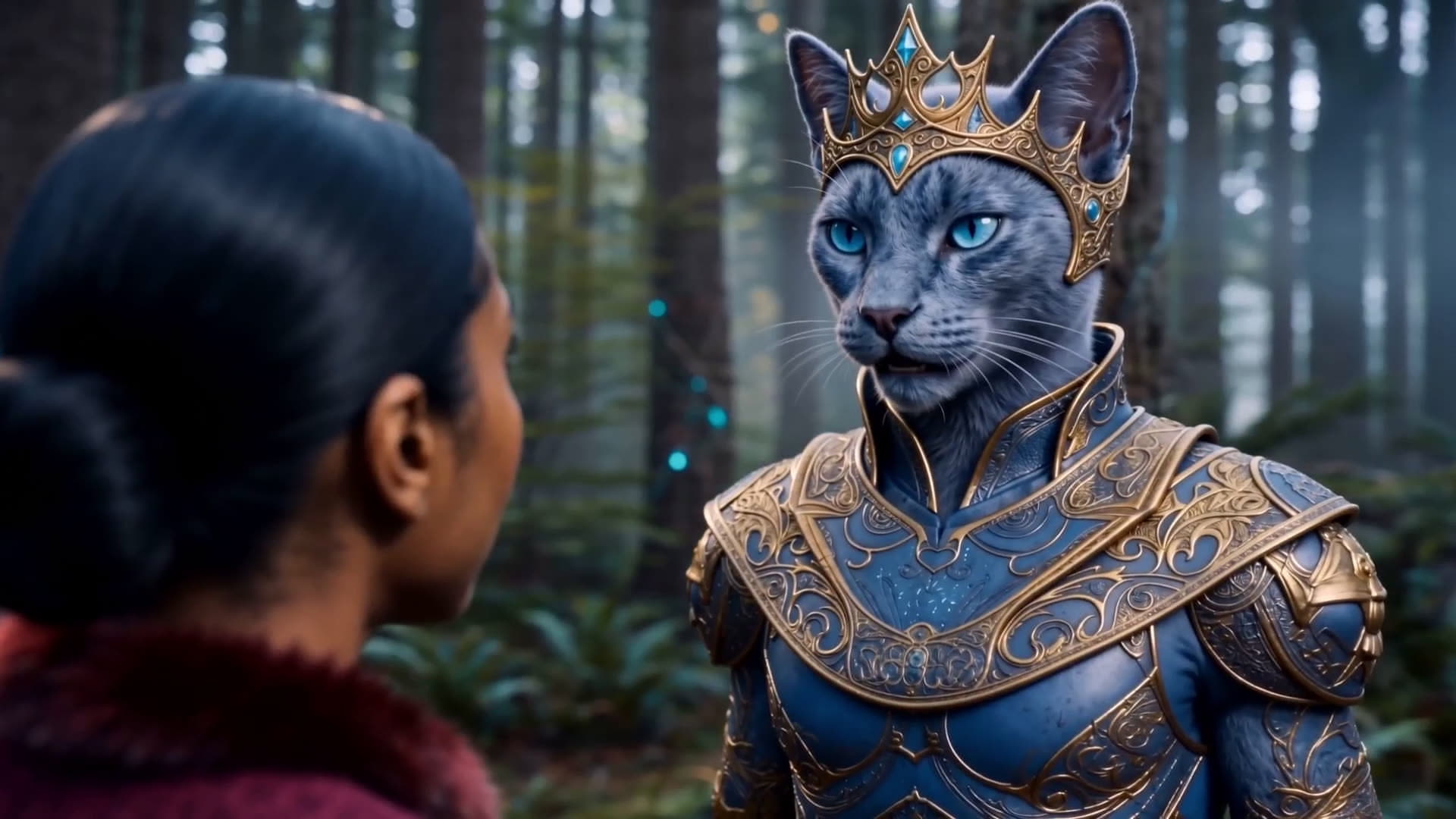
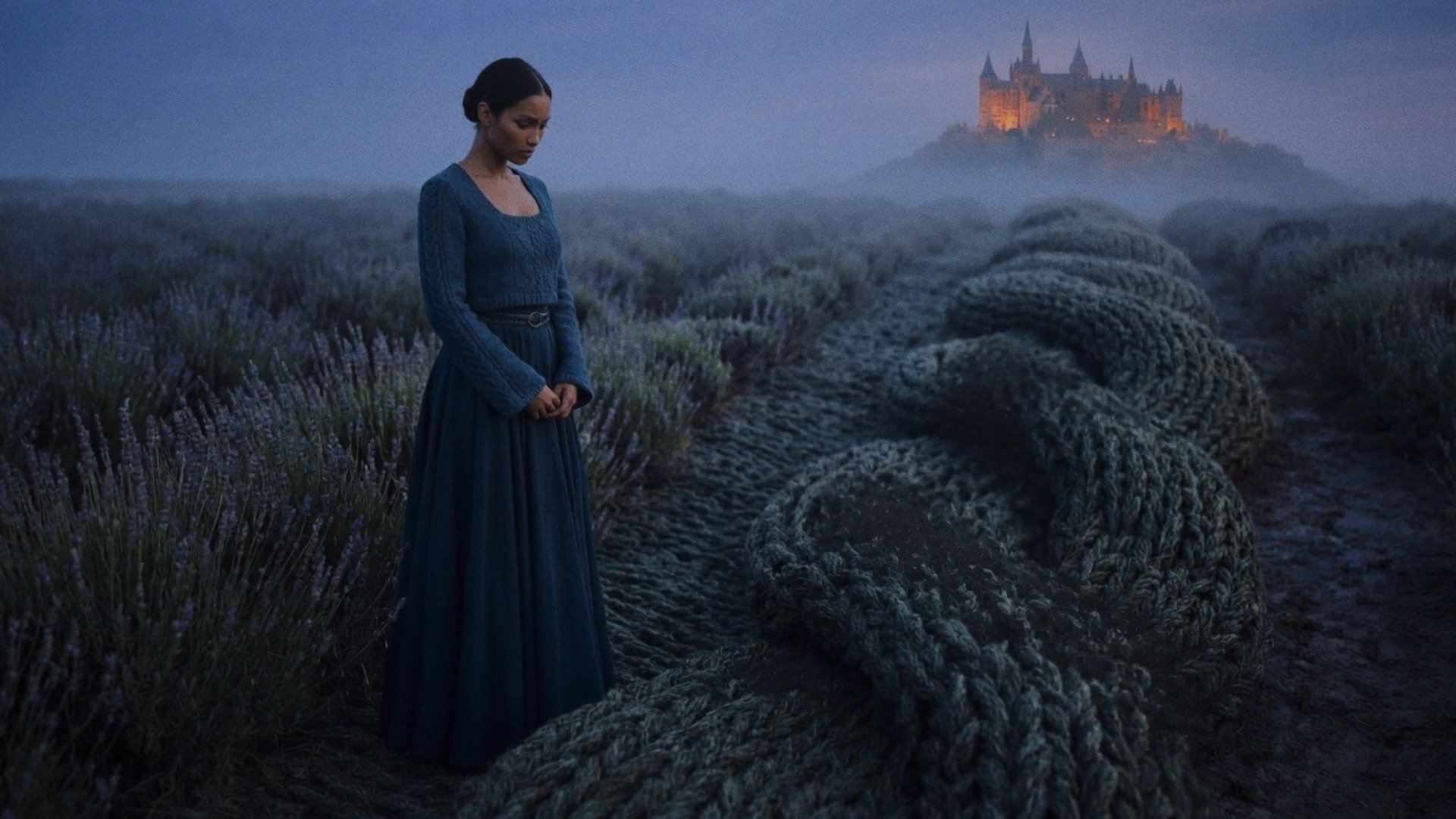
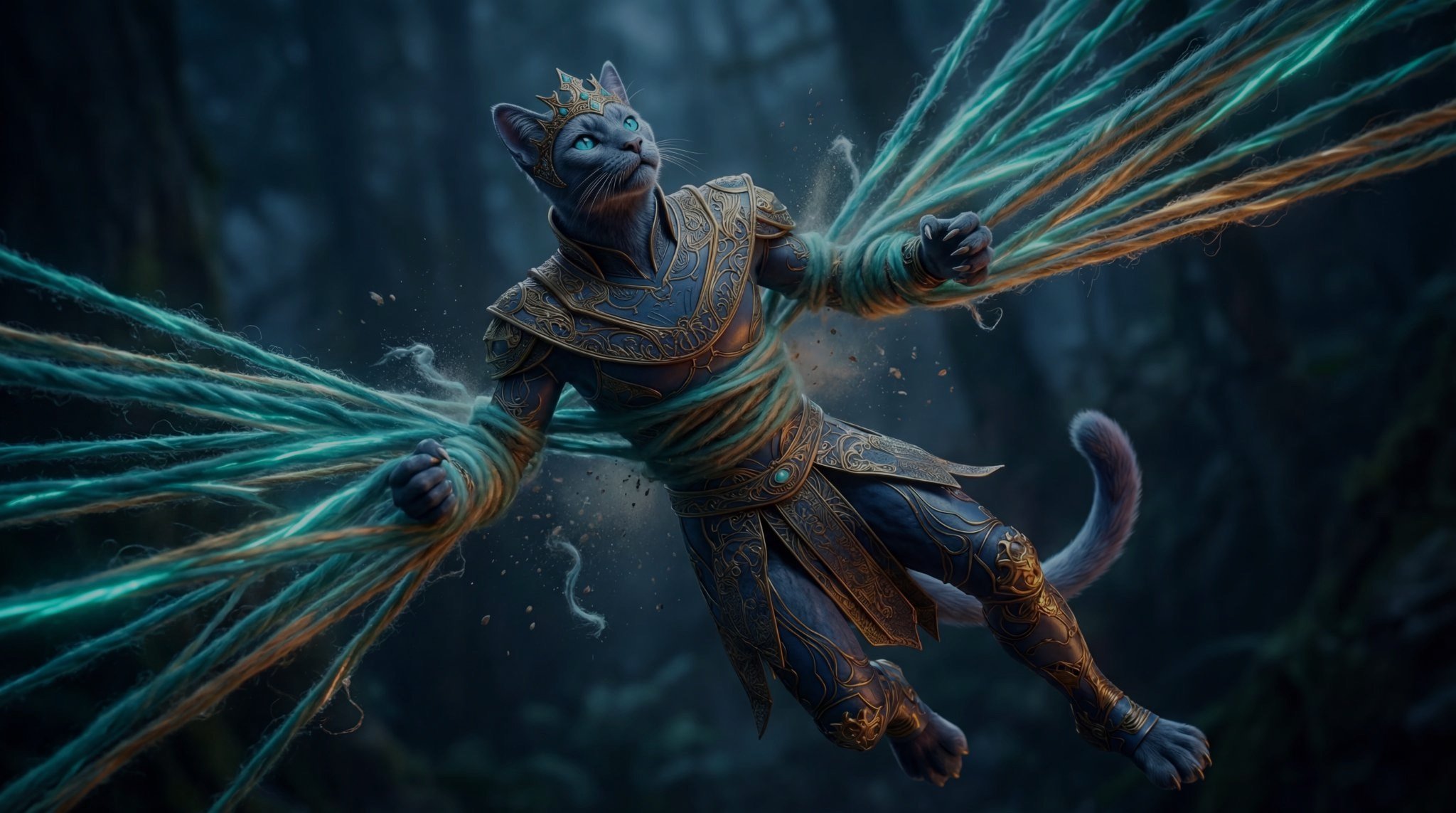
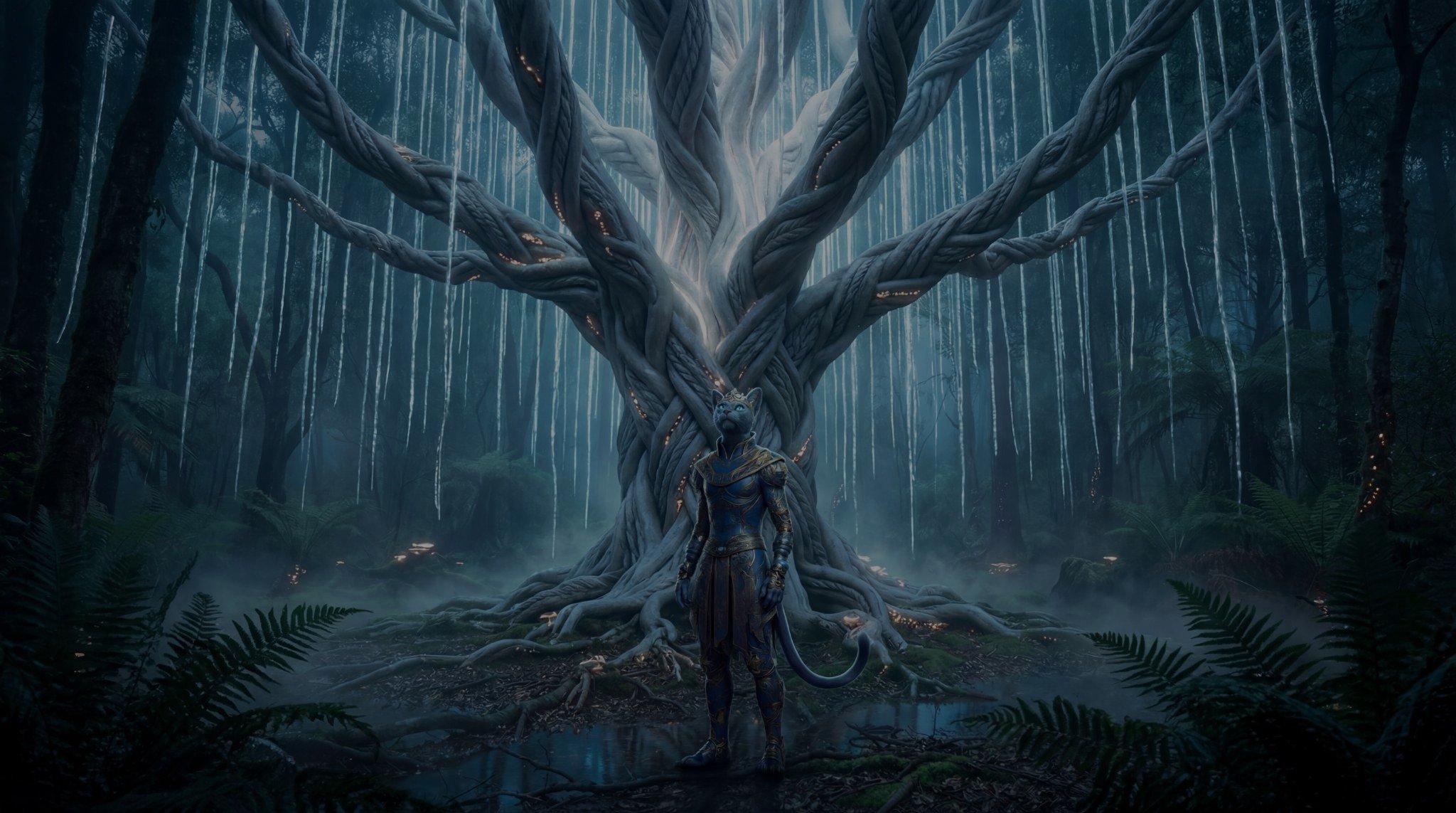
Kingdom of Cables is a fantasy web-series world from Shirley Paden Productions and Vertical Haus. The story follows Elyna Hill, a tech designer pulled into a parallel realm where code, couture and myth become physical. Fibercode, The Weave and tactile cable-knit environments give the project a visual rule: technology should feel woven, load-bearing and alive.
For brands, the useful lesson is bigger than fantasy. This is how an AI advertising agency can treat AI commercial production as IP development: start with human signal, define a repeatable world system, produce social-native chapters, and connect every asset back to audience growth.
The challenge: make a new IP world legible before the big screen
Fantasy worlds are expensive because they ask for everything at once: mythology, cast, places, costumes, props, language, tone and a reason to return. Kingdom of Cables needed a route that could prove the world in public without waiting for a traditional long-form greenlight.
The creative constraint was useful. Every chapter had to make the realm clearer while preserving authorship. Real performance carries the emotional read; AI world-building carries the scale; editorial and publishing discipline turns the work into a durable audience path.
The approach: performance first, AI-expanded around it
The production stack is deliberately hybrid. Actors, voices and character intent sit at the centre. Around that, Vertical Haus develops locations, look references, VFX-style fantasy frames, edit rhythms, captions, social cutdowns and web publishing.
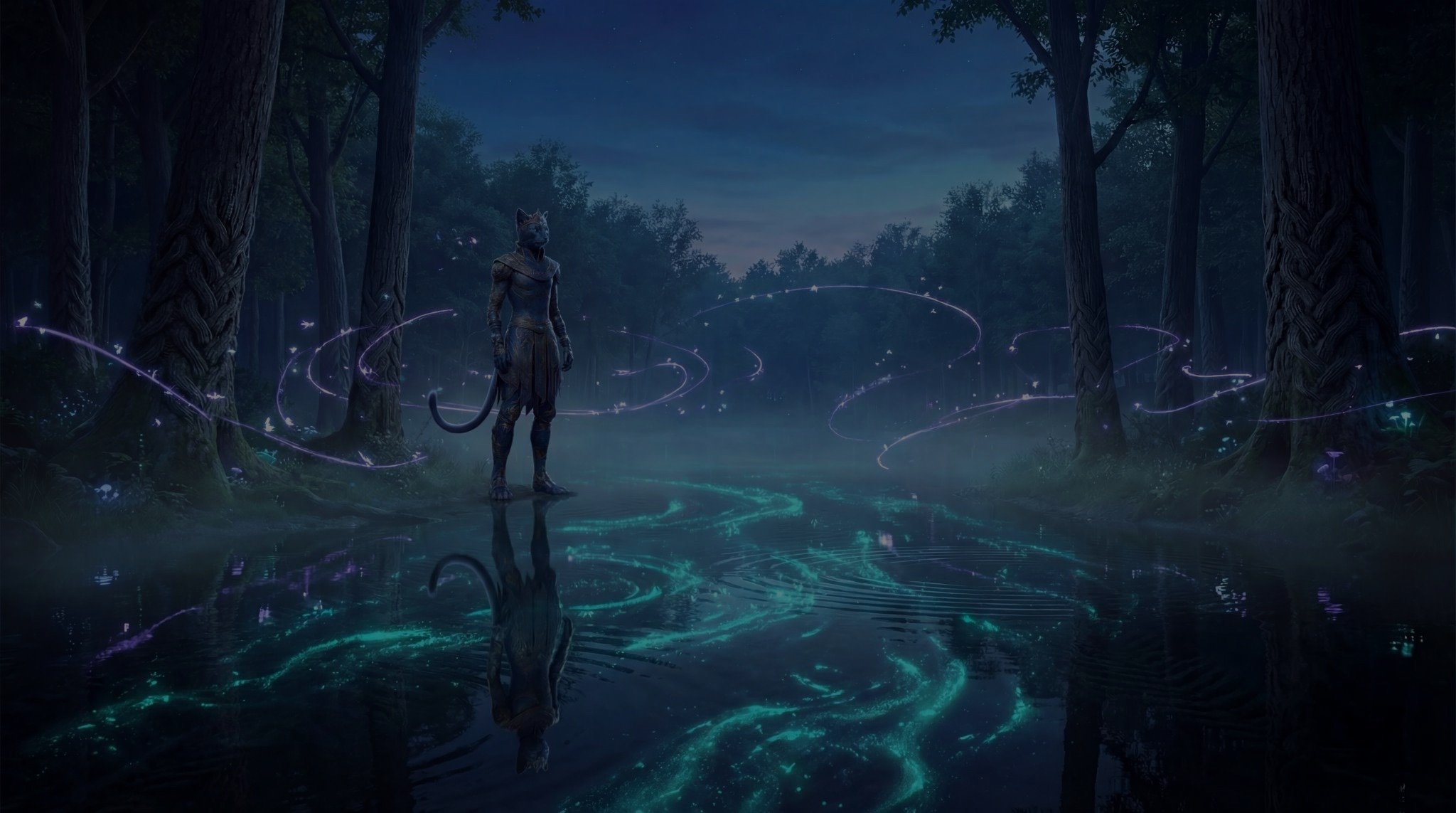
That matters because generative video production is weakest when it is asked to invent everything in isolation. It becomes more useful when each shot has a job: introduce Elyna, reveal Parsifal, show Fibercode in the environment, stage tension through The Weave, or point the audience toward the next episode, lore note or product path.
The production stack: story system, image language, motion and finishing
The working stack has five layers: script and continuity, character-led performance, AI scene development, cinematic finishing, and owned-channel distribution. The tools can change; the operating model should not. Each generated frame is judged against the same standard as a filmed asset: does it clarify the story, hold continuity, and make the next creative decision easier?
This is where AI video commercials and branded entertainment overlap. A campaign may not need a full fantasy mythology, but it does need a controlled world: product rules, emotional beats, formats, proofs, versioning and a pipeline that can turn one idea into many coherent outputs.
Why it matters for brands: IP is becoming a publishing engine
Kingdom of Cables is not being shaped as a single asset. It is being shaped as a launchable system: micro-epic episodes, lore, garments, books, patterns, social posts, SEO journal entries and a web hub. That combination lets the team learn which characters, visuals and story questions are pulling people forward before larger production bets are made.
The same model applies to AI ad creation. Instead of commissioning one isolated spot, brands can build a story world with recurring visual rules, reusable assets, measurable audience signals and fast creative iteration. AI agents for marketing become useful when they help route briefs, variants, analytics and publishing tasks around a human creative lead.
Context links: why the hybrid route is practical now
The wider production market is moving toward the same centre of gravity. Unreal Engine's virtual production resources show how real-time environments have become normal for film and television teams. MetaHuman Animate points to performance capture workflows that keep actor emotion editable inside digital characters. Runway's generative video documentation reflects the shift from prompt experiments toward repeatable video workflows.
Kingdom of Cables sits inside that movement, but its originality angle is not the tool list. It is the belief that fantasy IP can be grown like a product: human-led, audience-aware, visually consistent and built to publish before it scales.
What brands should take from it
- Anchor the system in people. Real actors and voices give AI filmmaking a human reference point.
- Define the world's rules before generating shots. Fibercode, The Weave and cable-knit physics make every frame easier to judge.
- Design for distribution early. Episodes, cutdowns, lore and search pages should be planned together.
- Use AI for scale, not blur. The strongest generative video production workflows make the creative standard sharper.
Vertical Haus helps teams turn story, performance, AI production and distribution into one coherent creative engine.